
Experiencing pain behind eye can feel uncomfortable, confusing, or even frightening. Sometimes, the discomfort resembles pressure deep inside the eye socket. Other times, it feels like a sharp ache that becomes worse when you move your eyes or look at bright lights.
Fortunately, many cases are associated with headaches, migraines, or other treatable conditions.
Understanding the possible causes, accompanying symptoms, and warning signs can help you decide what to do next. Because several conditions share similar symptoms, the location of the pain alone cannot confirm a diagnosis.
What Does Pain Behind Eye Feel Like?
Pain behind the eye describes discomfort that seems to originate inside or behind the eyeball rather than on its surface.
- A dull, aching sensation behind one or both eyes
- Pressure around the forehead or eye socket
- Sharp or stabbing discomfort
- Throbbing pain accompanied by a headache
- Pain that increases with eye movement
- Sensitivity to light
- Blurred vision or temporary visual disturbances
- Nausea or dizziness
The intensity also varies. Some people experience mild discomfort for a few hours, while others develop persistent symptoms that interfere with daily activities.
Seek emergency medical care for sudden severe eye pain, new vision loss, or eye pain accompanied by a severe headache, vomiting, or neurological symptoms.
Common Causes of Pain Behind Eye
Several medical conditions can produce discomfort behind the eyes. Although some are relatively common, others need prompt evaluation.
1. Migraine Headaches
Migraines frequently cause moderate to severe headaches that affect one side of the head. As a result, pain may extend into the area behind an eye.
Common migraine symptoms include:
- Throbbing or pulsating pain
- Nausea or vomiting
- Sensitivity to light and sound
- Visual disturbances in some people
- Pain that worsens during routine physical activity
Migraine attacks may last several hours or even days without effective treatment.
People experiencing recurring headaches may benefit from learning how to get rid of a headache through appropriate self-care and evidence-based treatment options.
2. Sinus Inflammation
The sinuses are air-filled spaces around the nose, cheeks, and forehead. When their lining becomes inflamed, pressure or discomfort may develop around the eyes.
Possible symptoms include nasal congestion, thick nasal discharge, reduced smell, and facial pressure.
However, sinus infections are not responsible for every headache around the eyes. In fact, migraines can produce similar facial discomfort.
A healthcare professional can help distinguish sinus-related symptoms from other headache conditions.
3. Eye Strain
Long periods of screen use, reading, or focusing on nearby objects may cause eye strain.
For instance, someone working on a computer for several hours might notice tired eyes, blurry vision, and discomfort around the forehead.
Eye strain can also occur when an outdated glasses prescription forces the eyes to work harder.
Although eye strain is usually temporary, persistent or deep eye pain deserves medical evaluation rather than being attributed to screen use alone.
4. Optic Neuritis
Optic neuritis involves inflammation of the optic nerve, which carries visual information from the eye to the brain.
Symptoms may include:
- Pain that worsens with eye movement
- Reduced vision in one eye
- Colors appearing less vivid
- Blurred or dim vision
Unlike ordinary eye fatigue, optic neuritis can affect visual function.
The National Eye Institute’s information on optic neuritis explains how this condition affects the optic nerve and why appropriate evaluation matters.
Therefore, new eye pain accompanied by changes in vision requires urgent medical assessment.
5. Cluster Headaches
Cluster headaches cause extremely severe pain, usually around or behind one eye.
Attacks typically last 15 minutes to three hours and may occur repeatedly during a cluster period.
Other symptoms can include a watery or red eye, nasal congestion, eyelid drooping, and restlessness on the affected side.
Because the pain can be intense, proper diagnosis and targeted treatment are especially valuable.
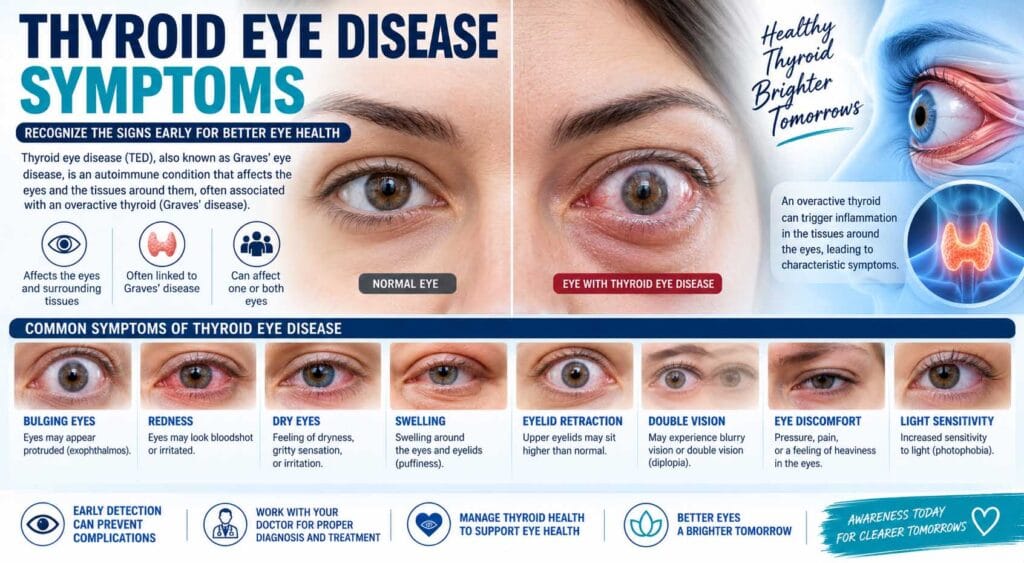
6. Thyroid Eye Disease
Thyroid eye disease is an inflammatory condition affecting tissues surrounding the eyes.
It can cause pressure, discomfort, eyelid swelling, eye bulging, or double vision.
Recognizing thyroid eye disease symptoms may help people with thyroid disorders identify changes that deserve professional evaluation.
However, this condition can also occur in people without a previously diagnosed thyroid problem.
Pain Behind Left Eye vs. Right Eye
Some people experience discomfort exclusively on one side.
Although the location can offer useful clues, it rarely identifies the exact cause.
Pain Behind Left Eye
Pain behind the left eye may occur with migraines, cluster headaches, eye inflammation, or other conditions.
For example, a migraine might cause throbbing discomfort on the left side alongside nausea and sensitivity to light.
However, persistent one-sided pain, particularly with visual changes, should be assessed by a healthcare professional.
Pain Behind Right Eye
Similarly, pain behind the right eye can result from headaches, eye strain, inflammation, or sinus-related problems.
A person might notice discomfort after prolonged computer work. Nevertheless, severe or worsening symptoms should never be dismissed as simple fatigue.
Neither side is automatically more dangerous. Instead, the accompanying symptoms and onset provide more useful information.
What Causes Sharp Pain Behind Eye?
A sudden stabbing sensation may feel different from ordinary pressure or aching.
Possible explanations include certain headache disorders, nerve-related pain, and eye conditions.
For instance, primary stabbing headaches can produce brief, sharp bursts of pain around the head or eyes.
However, sharp pain behind eye may also accompany a condition requiring urgent treatment.
Seek immediate medical attention if the discomfort occurs with:
- Sudden vision loss or significant blurring
- A red, severely painful eye
- Severe nausea or vomiting
- A sudden, unusually intense headache
- New double vision or difficulty moving an eye
- Weakness, confusion, or difficulty speaking
These symptoms can sometimes indicate conditions such as acute angle-closure glaucoma or neurological emergencies.
Pain Behind Eye Headache: Understanding the Connection
Headaches and discomfort behind the eyes frequently occur together because structures in the head and face share interconnected pain pathways.
For example, migraines and cluster headaches can produce pain centered near one eye.
Tension-type headaches may also cause pressure across the forehead and around the eyes, although they usually produce a more widespread sensation.
Occasionally, people notice that their head hurts when i cough, sneeze, or strain. While brief pressure changes can contribute to discomfort, a new or persistent cough-triggered headache should be evaluated.
In some cases, doctors investigate structural or neurological causes.
For example, chiari malformation symptoms may include headaches triggered by coughing or straining, often near the back of the head.
Still, most headaches do not indicate a structural brain disorder.
How Doctors Diagnose Pain Behind Eye
Because several conditions share similar symptoms, diagnosis begins with a careful review of your medical history.
A healthcare professional may ask:
- When did the pain begin?
- Does it affect one eye or both?
- Is the discomfort constant or intermittent?
- Does moving your eyes make it worse?
- Have you noticed changes in vision?
- Do headaches, nausea, or nasal symptoms occur alongside it?
Next, an eye examination may assess visual acuity, pupil responses, eye movements, and eye pressure.
Depending on the findings, additional tests may include a dilated eye examination, visual field testing, or imaging.
For example, an MRI may be appropriate when optic nerve inflammation or certain neurological conditions are suspected.
Not everyone needs imaging. Instead, testing should reflect the symptoms and examination findings.
Treatment Options for Pain Behind Eye
Treatment depends on the underlying cause rather than the pain’s location alone.
| Possible cause | Common treatment approach |
|---|---|
| Migraine | Appropriate pain relief, migraine-specific medication, and trigger management |
| Eye strain | Visual breaks, prescription correction, and workspace adjustments |
| Sinus inflammation | Treatment based on the cause, sometimes including saline rinses or nasal medication |
| Cluster headache | Prescription oxygen therapy or headache-specific medications such as triptans |
| Optic neuritis | Urgent specialist evaluation and individualized treatment |
| Thyroid eye disease | Specialist care based on inflammation, severity, and visual function |
For mild discomfort associated with eye strain, simple adjustments may provide relief.
However, avoid using prescription eye drops, especially steroid drops, without medical guidance.
Similarly, over-the-counter pain relievers are not appropriate for everyone. Follow product instructions and consult a clinician if you have relevant medical conditions or take other medications.
Home Care and Prevention Tips
When symptoms are mild and clearly associated with visual fatigue, practical habits may help reduce discomfort.
Take Regular Screen Breaks
Try the 20-20-20 approach: every 20 minutes, look at something approximately 20 feet away for 20 seconds.
Although evidence for this exact schedule is limited, regular breaks can reduce prolonged focusing demands.
Improve Your Workspace
Keep your monitor at a comfortable distance, reduce glare, and adjust screen brightness to match your surroundings.
Also, blink regularly because concentrated screen use can reduce blinking frequency and contribute to dry eyes.
Maintain Healthy Sleep Habits
Poor sleep may trigger headaches in susceptible individuals.
Therefore, aim for a consistent sleep schedule and adequate rest.
Stay Hydrated and Eat Regularly
Dehydration and skipped meals can contribute to headaches for some people.
Drinking enough water and maintaining regular meals may help, particularly when these are known personal triggers.
However, hydration alone cannot treat optic nerve inflammation, glaucoma, or other serious eye conditions.
When Should You See a Doctor?
Arrange a medical appointment if discomfort persists, repeatedly returns, or interferes with everyday activities.
An eye examination is particularly useful when pain occurs alongside visual difficulties.
Seek emergency care immediately for sudden vision changes, severe eye pain, a painful red eye with nausea, or a sudden severe headache.
Likewise, eye pain after an injury requires prompt attention.
After a head injury, recognizing symptoms of a concussion can help identify warning signs such as headache, dizziness, confusion, and difficulty concentrating.
However, worsening headache, repeated vomiting, seizures, or neurological changes after an injury require emergency evaluation.
Frequently Asked Questions
Can Stress Cause Pain Behind the Eye?
Stress may contribute to tension-type headaches and trigger migraines in some individuals. As a result, discomfort may develop around the forehead or eyes. However, persistent pain should not automatically be attributed to stress.
Why Does My Eye Hurt When I Move It?
Eye movement can worsen discomfort associated with optic neuritis or inflammation around the eye. Because some causes affect vision, new pain during eye movement deserves prompt medical assessment, especially when vision changes occur.
Can Dehydration Cause Discomfort Behind the Eyes?
Dehydration may contribute to headaches that cause discomfort around the eyes. However, isolated or severe eye pain is not a typical reason to assume dehydration is responsible.
Is Pain Behind One Eye Dangerous?
Not always. Migraines and other headache disorders frequently affect one side. Nevertheless, sudden severe pain, visual disturbances, or a red eye can indicate an urgent medical condition.
How Long Does Eye-Related Headache Pain Last?
Duration depends on the cause. Eye strain may improve after rest, while migraine attacks can last hours or days. Persistent, worsening, or recurring symptoms require medical evaluation.
Practical Steps for Protecting Your Eye Health
Pain behind eye can develop from headaches, visual strain, inflammation, or more serious medical conditions. Therefore, identifying the accompanying symptoms is more useful than relying on the location alone.
For mild discomfort linked to screen use, regular breaks, adequate sleep, and appropriate vision correction may help.
However, sudden severe pain, new visual changes, or neurological symptoms require immediate medical attention.
Above all, pay attention to changes in your usual symptoms. Early professional assessment can help identify the cause and protect your vision.